Invest-Gate held its 27th roundtable, titled “The Post-Sales Era: Managing Projects, Communities & Cities,” which took place on Monday, February 16, 2026, at 9:00 AM, at the Nile Ritz-Carlton Hotel – Alf Leila We Leila Ballroom.
The roundtable brought together senior government officials, real estate developers, operators, advisory and asset management firms, property and facility management companies, investors, financiers, public-sector stakeholders, and technology enablers that examined how projects, communities, and cities can be effectively managed beyond delivery.
As Egypt’s real estate market continued to mature, the roundtable discussions spotlighted governance and long-term operations as decisive factors in preserving asset value and strengthening competitiveness. They also emphasized the critical transition from development driven models to structured operational frameworks capable of generating sustainable post-sales income streams, reinforcing market confidence, and ultimately positioning assets to attract both local and international investors.
The roundtable addressed how projects, communities, and city scale developments could be managed as integrated operating systems, with a focus on occupancy optimization, service excellence, operational efficiency, and recurring revenue generation. It placed emphasis on ensuring stable cash flow, strengthening market positioning, and enhancing long-term asset performance.
Participants also shared diverse insights on governance structures, whether developer-led, third-party managed, or structured through public & private partnerships; will also be examined, alongside the growing role of data analytics and digital platforms in supporting pricing strategies, operational performance, and informed decision making, ultimately preparing assets for sustainable investment cycles, scalability, and future exit strategies.
This roundtable was divided into two sessions, both moderated by Mr. Amr Elkady, Founder & Managing Director of AKD Advisory. The first session entitled: “Protecting Value After Delivery” that focused on defining the real transition point from project delivery to long-term operation and recurring revenue generation, reviewing governance models and the allocation of roles and responsibilities after delivery. It also discussed Preparing Assets for Long-Term Investment Cycles focusing on how management readiness affects income stability, exit strategies, institutional investment, and scalability, supporting long-term asset performance.
The second session, titled “Creating Value Through Operation,” examined strategies for maximizing returns and building sustainable revenue streams during the operational phase, as well as establishing recurring post-sales income through leasing, operational services and community and facility management. The discussion also highlighted the best practices in managing communities and mixed use assets, while strengthening operational efficiency and long revenue stability. It also addressed the role of data and digital platforms in optimizing operations, service pricing, and informed decision making; enhancing asset readiness and reinforcing investor and tenant confidence in projects.
The roundtable also witnessed the presence of an elite group of senior government officials and executives, alongside experts in real estate development, project management and operations and digital platforms, including: Dr. Eng. Abdelkhalek Ibrahim, Member of the House of Representatives; Dr. Mostafa Mounir, CEO of Tourism Development Authority; Eng. Khaled Sedeik, Chairman of the Board of Urban Development Fund; Dr. May Abdel Hamid, CEO of Social Housing and Mortgage Finance Fund, and Mr. Mohamed Selim, General Manager Research and Business Development at the Egyptian Exchange.
Additional participants included: Eng. Ayman Amer, Group General Manager of SODIC; Mr. Ibrahim El Missiri, Group CEO of Somabay; Eng. Hazem Helal, CEO of Orascom Real Estate; Eng. Bedeir Rizk, CEO of PARAGON | Adeer; Eng. Ahmed Mansour, CEO of Cred Developments; Eng. Muhannad Saleh, Executive General Manager of Horizon Operation and Management S.A.E, Eng. Mohammed Azmy Ateia, Director of Smart Cities at Orange Egypt; Mr. Omar El Tayebi, CEO of TLD– The Land Developers; Mr. Ahmed Kira, Managing Director of Horof Group for Touristic Projects; Mr. Tarek Mourad, General Manager of Cairo Marriott Hotel; Dr. Mina Fayek Fouad, CEO of Egypro FME; Mr. Mohamed Galal, Chairman of TSM Asset Management; and Eng. Ahmed Ehab, CEO of Madaar Developments,
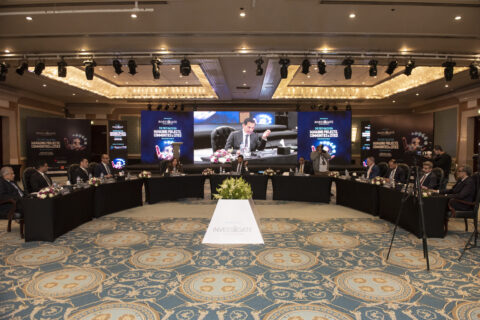
The roundtable was inaugurated by Ms. Safaa Abdel Bary, General Manager and Business Development Director of Invest-Gate, who extended her gratitude and warmly welcomed the distinguished attendees. She expressed her pleasure in bringing together an elite group of decision makers and industry experts, emphasizing that the event comes at a pivotal time for Egypt’s real estate market.
She noted that the sector is witnessing a genuine phase of maturity, where success is no longer defined solely by the scale of development or the speed of delivery, but rather by the efficiency of project management and post-sales operations. She highlighted that the industry has transitioned into a new phase centered on professional operations, governance, and asset management as fundamental pillars for preserving value, enhancing competitiveness, and building sustainable revenue streams that strengthen investors’ confidence.
She underscored the importance of discussing this shift toward integrated operating models capable of generating long-term value. Concluding her remarks, she thanked the participants for their engagement and expressed her anticipation of constructive discussions that would support the future of Egypt’s real estate sector.
The first session started with remarks by Mr. Amr Elkady, Founder & Managing Director of AKD Advisory, who began his remarks by extending his appreciation to Invest-Gate for organizing the event and bringing together a distinguished group of leading real estate developers, legislative experts, and key decision-makers in the market. He praised Invest-Gate’s role in shedding light on the sector’s most pivotal issues, emphasizing its consistent commitment to anticipating emerging real estate trends and presenting them for discussion from multiple professional and regulatory perspectives, thereby elevating the level of dialogue and knowledge exchange among stakeholders.
He emphasized that success was once measured solely by sales performance, As the market evolved, success became linked to project delivery. Today, however, the most prominent benchmark of success is the post-delivery phase, namely operations and management. He added that the success of any real estate project should not be reduced to sales volume or the speed of marketing. While important, these indicators do not reflect the project’s full strength. True success, he noted, begins after delivery when marketing promises are translated into tangible reality, and the quality of execution and customer satisfaction are tested on the ground.
He further explained that the post-delivery phase represents the most sensitive stage in a project’s lifecycle, as professional operations and management constitute the decisive factor between a project that achieves long-term sustainability and one whose value gradually declines. Operations, he stated, are not merely about providing day-to-day services, but rather an integrated system aimed at preserving asset value, enhancing attractiveness, and ensuring sustained demand.
He concluded by affirming that effective management is a fundamental pillar for stabilizing cash flows, generating recurring revenues, and building a strong, lasting reputation for the project in the market thereby reinforcing its competitive position and enhancing its long-term investment value.
Dr. Eng. Abdelkhalek Ibrahim, Member of the House of Representatives, commended Invest-Gate for consistently addressing important and diverse industry topics, underscoring the value of such forums in discussing the needs of the real estate sector, particularly with regard to legislation and regulatory frameworks.
He explained that while numerous government-led real estate projects have been implemented in recent years, a clear operational gap remains. This challenge, he noted, may stem from existing procedures, the roles of entities involved in management and regulation, or the limited operational capacities and expertise within the Egyptian market, factors that directly impact the ability to efficiently manage projects of such scale.
Ibrahim pointed out that the market lacks a comprehensive framework that effectively links handover to operation, stressing the need for a responsible authority to take proactive steps to ensure a smooth transition. He called for establishing clear company classifications and precisely defining their roles and responsibilities. He further emphasized that regulating this aspect requires the creation of a dedicated body or authority potentially as part of the proposed Real Estate Regulatory Authority in Egypt similar to the National Telecom Regulatory Authority, with a governing law that ensures effective operational and maintenance mechanisms.
He added that homeowners’ associations may offer viable solutions for residential developments; however, they are not suitable for large scale, mixed-use projects, such as New Alamein City, which is fundamentally driven by a technology-based model.
Ibrahim stressed the importance of governance reforms and reviewing current legislation, alongside developing human capital to keep pace with the market’s significant scale compared to the relatively limited number of qualified operators. He highlighted that most future asset and facility management functions will increasingly rely on artificial intelligence (AI), making it essential to build technical expertise and know how in this domain, as well as to train human resources to ensure operational efficiency and long-term sustainability.
He concluded by proposing a dedicated session to discuss the rental of branded residences and similar assets as an underutilized investment opportunity. He also emphasized the importance of fully operating existing cities, noting that some international investors are reluctant to manage cities that are only partially developed.
Dr. Mostafa Mounir, CEO of Tourism Development Authority, stated that the tourism development experience in managing post-delivery operations represents one of the sector’s successful models. He explained that the value of any tourism project cannot be fully realized without a fully integrated and effective operational system, as operations are the true guarantor of sustained quality and of preserving the project’s market position.
He stressed the need for companies to maintain their competitiveness by ensuring operational efficiency, noting that from day one, strict controls and standards are put in place to secure the essential components of any tourism project, whether in terms of technical and administrative readiness, as well as verifying the operator’s capability to sustain performance and remain competitive.
He further explained that there is continuous coordination with the ministry of Tourism and Antiquities, regarding operational procedures and licensing. He affirmed that oversight does not stop at the issuance of licenses but continues on a periodic basis to ensure full compliance with approved standards. In cases where any requirements are breached, approvals for operation or its continuation are not granted.
He emphasized that preserving this integrated system is imperative amid strong regional and global competition, underscoring the importance of periodically revisiting operational mechanisms and introducing more advanced operational phases that keep pace with real estate and tourism market developments while supporting their sustainability.
He added that there is a development plan for the Red Sea highway, ports, and areas such as Galala and Safaga, expecting the impact of these projects to begin materializing within 10 years.
He concluded by affirming that there is basic sustainability standards related to energy, services, activities, and security, with violations enforced in cases of non-compliance. He also noted that government housing projects targeting middle-income segments represent around 80% of the total market and face challenges in adhering to these standards.
In the same context, Eng. Khaled Sedeik, Chairman of the Board of Urban Development Fund, affirmed that a real estate developer’s reputation is not built solely on the quality of construction or the scale of its projects, but primarily on the efficiency of property management and operations after handover. He noted that several leading companies in the market derive their strength and standing from their ability to professionally manage their developments during the post-delivery phase.
He emphasized the importance of engaging specialized and professional entities to manage and operate projects, stressing that this stage represents the real differentiator in preserving asset value and enhancing competitiveness. He added that post-sales management once a project becomes occupied and operational is the key to sustainability and long-term success in the real estate market, as it directly impacts quality of life within the development and the durability of its performance.
Sedeik explained that the Urban Development Fund adopts this approach based on its firm belief that the true value of any project is not determined at the construction stage, but rather materializes through an effective operating system capable of safeguarding assets and maximizing long-term returns.
He further stated that the minimum threshold for transitioning to operational readiness should be when 15 – 25% of the project is completed, alongside the provision of essential security measures. He stressed the need for a competent authority to grant operating licenses and for the availability of trained personnel. Additionally, he noted that maintenance deposits could be strategically invested in commercial facilities within the project to generate returns for residents and ensure asset sustainability, rather than being limited solely to security-related expenditures.
Dr. May Abdel Hamid, CEO of Social Housing and Mortgage Finance Fund, stated that the Fund is considered the largest developer in Egypt, having completed nearly 800,000 housing units, in addition to around 300,000 units currently at various stages of implementation. She noted that the Fund is responsible for executing approximately 60% of government housing projects. She affirmed that the Fund relies primarily on the mortgage finance mechanism to ensure sustainability, highlighting that more than 3.5 million people have moved to housing units delivered through its projects.
She explained that the Fund operates in partnership with the New Urban Communities Authority and Arab Contractors. It also owns a specialized operations company that manages maintenance activities in cooperation with both entities. A 5% maintenance deposit is allocated paid in installments through banks whose returns are used to finance periodic maintenance and façade upkeep, stressing that this deposit is non-refundable. She added that older projects face the risk of value deterioration over time; however, current developments focus on preserving unit value throughout repayment periods of up to 20 years, with an exceptionally low default rate of just 0.05%.
She further indicated that the Fund places significant emphasis on monitoring occupancy rates to ensure sustained utilization of units. Buyers rely heavily on the quality of maintenance services prior to purchase, supported by a dedicated customer service call center that receives and addresses complaints, thereby reinforcing project sustainability and service quality for beneficiaries.
She added that the Fund invests maintenance deposits in banks and treasury bills, generating returns ranging between 25 – 28%, creating surpluses that help cover maintenance expenses particularly as the early operational years typically require limited maintenance spending.
She also noted that asset management practices are currently evolving across different project tiers, benefiting from Egypt’s comparative advantage in treasury and bond yields. She explained that commercial components, advertising, and waste recycling are utilized as sources of recurring revenue. She added that plans will soon be announced to establish partnerships with developers in social housing projects to enhance operational sustainability.
She further clarified that since 2020, the Fund has begun investing in sustainable developments aimed at reducing maintenance and operating costs, becoming the first entity in the Middle East to obtain the EDGE Advanced certification reflecting its commitment to international environmental standards and resource efficiency, while strengthening the long-term sustainable value of its assets.
She concluded her remarks by underscoring the importance of establishing a House Price Index to provide accurate and transparent real estate price indicators, supporting market transparency and facilitating informed investment and operational decision-making.
Mr. Mohamed Selim, General Manager Research and Business Development at the Egyptian Exchange, stated that listed companies or those seeking listing on the EGX must place significant emphasis on transparency and financial disclosure. The greater the level of transparency, he noted, the lower the risk exposure for both the company and investors, as investors assess not only overall corporate performance but also the developer’s reputation. He added that robust disclosure practices mitigate risks facing both investors and the company itself.
Selim pointed out that unlisted companies on the EGX are not currently subject to a regulatory authority overseeing their financial statements or ensuring a clear distinction between accounting profits and actual cash flows, underscoring the need for an independent body to regulate the real estate market. He further explained that a substantial portion of the market capitalization on the EGX is concentrated in the real estate sector, meaning that any disruption within the sector can significantly impact the performance of the stock exchange.
Regarding listing and valuation criteria, Selim stressed that investors no longer rely solely on a company’s land bank, as they now possess more comprehensive insights into corporate performance. He explained that valuation is primarily based on discounted cash flow (DCF) analysis to determine whether a company can generate returns exceeding those of treasury bills or bank deposits.
He emphasized that valuators must have a thorough understanding of both cash flow dynamics and accounting principles, as the operational asset management framework directly influences a company’s profitability and its ability to secure financing, particularly through expanding the use of non-traditional financing instruments, most notably bond issuances to fund projects. Such instruments, he noted, provide long-term liquidity that supports post-handover operations and management, while enhancing cash flow stability away from short-term sales pressures.
In the same context, Eng. Ayman Amer, Group General Manager of SODIC, stated that most real estate developers limit their role to construction without ensuring the project’s continuity after delivery. He highlighted the distinction between a company that manages an asset to collect and preserve revenues and one that manages the project operationally after handover. He explained that a major challenge lies in the separation between the designer and the operator, which can sometimes result in design inefficiencies that affect residents’ willingness to pay maintenance fees and hinder project sustainability. He stressed that operator-oriented design forms the foundation of any real estate project’s success.
He noted that a project’s real lifecycle begins after delivery, when operations, service continuity, and performance sustainability become the decisive factors in preserving property value. He added that there is widespread confusion between the role of an asset manager and that of a service management company, often due to misunderstanding their functions. He clarified that asset management firms receive financial compensation for their services, affirming that SODIC is celebrating 30 years of supporting its developments through an operational system that ensures the continued appreciation of property value throughout its lifecycle.
He further explained that the presence of value drivers such as schools, universities, pharmacies, and essential services accelerates asset appreciation. The company studies all critical aspects that facilitate residents’ daily lives and ensure an integrated community environment. He reiterated that the disconnect between designer and operator remains a key challenge that must be addressed to guarantee project success and sustainability.
He added that SODIC West stands as a successful model for fully integrated service communities, while stressing the need to transform integration into a sustainable business model that secures economic returns and operational continuity, supported by professional management systems delivering services in line with international standards. He affirmed that cooperation between developers and government entities, alongside clear legislation, ensures a balanced relationship between owners and tenants and promotes market stability.
In closing, he pointed out that the market still lacks specialized institutions dedicated to building qualified cadres for real estate operations, whether in security or other operational fields. While the company trains its employees and provides dedicated courses, he emphasized that this should not be the developer’s role but rather the regulator’s responsibility. He also noted that SODIC was among the first companies to utilize glass façades and heat-insulating building materials in compound designs, ensuring operational efficiency and long-term project sustainability.
Mr. Ibrahim El Missiri, Group CEO of Somabay; affirmed that the success of any real estate development does not end with sales and handover, but rather requires a fully integrated operational framework that preserves long-term sustainability and asset value while generating recurring and sustainable returns. He explained that achieving such returns no longer depends solely on unit sales, but on creating recurring income streams through operations and management. In this context, developers typically retain 10-20% of a project for leasing and hospitality management to ensure stable cash flows. He added that the launch of the first sports-specialized hotel and the diversification of sports activities in Somabay have contributed to establishing a sustainable operating model, increasing revenues, and delivering strong operational returns.
The group’s developments include hospitality, service, sports, and retail components, with a strong focus on essential services such as schools, educational facilities, clubs, and medical services to ensure a fully integrated community environment. He stressed the importance of prohibiting unit handovers prior to full completion and final finishing, while enhancing thermal and acoustic insulation and providing essential infrastructure, including fiber-optic cable. He emphasized that the developer must absorb any financial or operational gaps to ensure the project’s continuity. He also highlighted the importance of redeveloping older projects that have already been delivered by appointing capable developers who can operate them efficiently, making professional operations an integral part of the success of mixed-use developments.
He further noted that rental companies face reluctance in fully complying with the law due to the 22% tax rate, which encourages individuals to avoid formal registration. He proposed reducing taxes on the leasing component for property owners in order to increase occupancy rates and enhance revenues.
While Eng. Hazem Helal, CEO of Orascom Real Estate, emphasized that developers must deliver their units in full, noting that the process of creating true property value begins upon handover, and that the key differentiator for a project’s success lies in the efficiency of post delivery management. He highlighted that the Egyptian market currently hosts around 1,900 developers a very large number questioning whether the necessary expertise exists to manage such a volume of projects efficiently. He added that the situation 30 years ago was entirely different, with no more than 3 – 4 projects, whereas today the market shows a clear focus on marketing, often at the expense of expertise and know-how in managing projects after delivery.
He stressed that the upcoming period should prioritize building human capacity and developing skilled personnel, while leveraging modern technology and management tools to enhance operational efficiency, monitor performance, and ensure the sustainability of asset value, thereby guaranteeing effective project management and an improved customer experience. He also noted that the technological component increases the value of the property, emphasizing the importance of selecting appropriate elements for each area, such as hotels, sports, and medical facilities, to enhance operational value and investment attractiveness.
He concluded by stating that choosing the right team within the developer’s organization is one of the most critical factors for any real estate project’s success, ensuring operational efficiency, management quality, and project sustainability.
Eng. Bedeir Rizk, CEO of PARAGON | Adeer, emphasized that programming smart cities begins at the master planning stage rather than at the operational phase alone. He noted that new cities must be built with infrastructure that enables them to function as smart ecosystems, leveraging artificial intelligence technologies such as automated fault notifications sent directly to operators without requiring resident intervention. He added that all project catalogues are integrated into the back-end system, allowing AI to guide users and manage operations without the constant need for on-site technical specialists.
Rizk also highlighted the challenge of monitoring developments and ensuring their long-term sustainability. He explained that hundreds of thousands of individuals purchase units in areas such as the Old North Coast without the presence of a dedicated asset manager, underscoring the urgent need to develop integrated, technology driven operational systems to preserve asset value and ensure efficient performance.
He concluded by pointing to fractional real estate as an innovative solution for operating real estate developments in Egypt. He noted that the Financial Regulatory Authority issued the fractional real estate law following the roundtable organized by Invest-Gate, clearly defining roles and responsibilities to establish an integrated framework for project management and oversight, while holding violators accountable under contractual terms. He added that declining interest rates have reshaped individuals’ perception of real estate as an investment vehicle capable of generating recurring returns and capital appreciation, which could contribute to attracting foreign capital into Egypt.
Eng. Ahmed Mansour, CEO of Cred Developments, highlighted that the Unified Building Law No. 119 of 2008 obliges developers to ensure the operational readiness of their projects. He emphasized the need for clearer guidance on this legislation, including specifying a time frame for completion to guarantee that projects are ready for occupancy and to encourage smooth operational launch, while establishing mechanisms to determine the order of occupancy in new cities, whether for service providers or residents.
He noted that stimulating the operational phase depends on the project’s full readiness, which can be achieved by facilitating completion procedures and setting a clear timeline to ensure a smooth transition and occupancy process. Mansour added that one of the main challenges is that residents are often not ready to move to the new capital. To address this, the company has intensified events over the past eight months to familiarize consumers with the project and assure them of its readiness for habitation, with all operational measures outlined in the company’s plan to ensure post-delivery continuity. He concluded by pointing out that the real estate market includes approximately 6,700 developers, yet fewer than 2,000 of them comply with paying real estate taxes.
Eng. Muhannad Saleh, Executive General Manager of Horizon Operation and Management S.A.E, opened his remarks by commending the initiative to establish a House Price Index, noting that implementing such an index in Egypt would significantly stimulate market activity. He explained that it would provide accurate and reliable data to help developers and investors make informed investment decisions while enhancing transparency in price setting. He further emphasized that digital transformation is no longer optional but has become a fundamental element for achieving real estate stability and market recalibration, by improving project monitoring, enhancing asset management efficiency, and facilitating access to financial and operational information.
Saleh also highlighted the critical importance of involving the operator from the very beginning, starting at the design stage, to ensure that projects align with operational requirements, maintain performance sustainability, and maximize long-term asset value. This approach, he noted, strengthens management efficiency, delivers a seamless experience for both investors and residents, and fosters a culture of professional operations in the real estate sector.
He also stressed that for large scale developments, meticulous planning is essential, particularly to ensure alignment between the owner’s and operator’s vision. This includes establishing clear Key Performance Indicators (KPIs) and Service Level Agreements (SLAs) to govern performance and ensure accountability.
Eng. Mohammed Azmy Ateia, Director of Smart Cities at Orange Egypt, stated that investing in technology has become an indispensable necessity for efficiently managing both life and business. He highlighted that the company aims to increase unit value for investors and owners, while ensuring the delivery and maintenance of all facilities and services through an integrated system encompassing security and maintenance.
He added that the company is developing a centralized platform to manage all facilities and procedures within the compound, enabling improved administrative performance and leveraging services as an additional revenue source that enhances overall project and company returns.
Ateia also emphasized the importance of integrating technology and sustainability concepts from the design stage, noting that proactive consideration of these factors contributes to higher project efficiency, reduces future operating and maintenance costs, enhances quality of life within the project, and ensures long-term sustainability.
In the same context Mr. Omar El Tayebi, CEO of TLD – The Land Developers, emphasized that a developer’s true role extends far beyond construction and sales, encompassing all stages of a project, with the real quality and value becoming evident post-handover. In the residential sector, he explained, this value is reflected in the daily experience of residents, including street cleanliness, efficiency of services, responsiveness to maintenance requests, and the uninterrupted availability of essential facilities.
He stressed that customer satisfaction begins at the point of handover, and any shortcomings in the post-delivery phase can diminish a project’s value and affect the company’s reputation. Continuous developer presence and oversight of operations, he noted, not only preserve asset value but also strengthen trust among clients and investors, transforming the project into a long-term investment capable of competing effectively in the real estate market.
Mr. Ahmed Kira, Managing Director of Horof Group for Touristic Projects, highlighted that the hotel component represents the true value of any real estate project. He noted that while developers often worry about a property bubble, hotels remain a promising investment for the future. He explained that the government aims to create 500,000 hotel rooms to attract approximately 30 million tourists; currently, around 190,000 rooms will be available by 2026. Additionally, the North Coast currently requires 200,000 – 300,000 rooms, which should encourage developers to invest in this sector.
He emphasized that hotel investment provides real added value for developers, serving as a continuous source of foreign currency revenue, which helps protect it from depreciation. He added that enabling foreign ownership of real estate units, along with offering appropriate incentives, further strengthens this role.
Kira also pointed out that the main driver for real estate developers in Egypt is currently the Ministry of Housing, while vacation homes fall under the management of the Ministry of Tourism, generating returns in foreign currency rather than the Egyptian pound.
Continuing the discussion, Mr. Tarek Mourad, General Manager of Cairo Marriott Hotel, highlighted the significant role that hospitality expertise plays in enhancing real estate investment. He emphasized that the distinction between real estate and hotel investment becomes almost indistinguishable when residents are offered a fully integrated experience. Travelers staying in a hotel for a period often feel at home, enjoying premium services, choice of location, and a level of comfort that suits their preferences, while potentially developing a connection with a particular hotel brand and its distinctive style of hospitality.
He noted that the psychological aspect linked to human experience and personalized service forms the foundation for the sector’s success and long-term sustainability. In this context, branded residences provide a superior experience, elevating service quality from the moment of arrival.
Mourad stressed the importance of selecting well known brands suited to the area to ensure high service standards and maximize the attractiveness of the investment.
On another note, Dr. Mina Fayek Fouad, CEO of Egypro FME, highlighted that their company, specialized in Facility Management, has been operating in Egypt for 24 years. He emphasized that the maximum allowed downtime is only three seconds, and noted that no breakdowns have been recorded in the past six years.
Fouad stressed that the company’s work goes beyond supplying labor or performing routine maintenance, focusing instead on creating real value for the assets they manage. Currently, they oversee 300 buildings across 21 governorates, covering a total area of 3.5 million square meters.
He explained that the company has successfully reduced utility costs, extended asset life by 50%, and decreased spare parts replacement rates by 19%, significantly lowering operational expenses.
Fouad added that they provide Bed & Home Services, which generate additional revenue and enable the delivery of high quality services quickly and at very reasonable costs, ensuring effective facility management and high customer satisfaction.
In addition, Mr. Mohamed Galal, Chairman of TSM Asset Management, explained that asset management expertise initially developed in the banking and hospitality sectors, noting that the primary challenge lies in the high costs of managing assets effectively. He added that successful asset management models are typically applied to high value, high return projects, whereas mid-tier developments often struggle to implement the same approach due to lower returns.
He pointed out that social or low cost housing projects worldwide often rely on a self-contained, high-quality area whose revenues support the rest of the development. Galal emphasized that current maintenance deposits fail to achieve their intended purpose, especially amid currency fluctuations, and that asking residents to pay additional maintenance fees often meets with resistance.
Galal stressed that asset management represents the other side of project design, with project success depending not only on the quality of the design itself but also on well-trained human resources. He highlighted the importance of alternative revenue streams to enhance the value of maintenance deposits, such as retaining a portion of hotel units and restaurants for the company, renting out certain units, or entering co-branding partnerships with international brands, measures that increase returns and maximize long-term project value.
He added that fractional real estate in Egypt is currently not implemented correctly, as the asset should continue generating ongoing returns rather than being purchased solely for ownership. Galal emphasized the need for specialized asset management companies, noting that while recent regulations by the Financial Regulatory Authority protect investor rights, they are insufficient; operations or resale strategies must be leveraged to achieve real profits.
The roundtable concluded with a speech by Eng. Ahmed Ehab, who emphasized that the main sources of revenue for a developer come from commercial units and rentals, in addition to facility management services and brand equity. He noted that the company retains approximately 20% of the project’s value, whether through hotel or commercial components, to ensure continuous cash flow and sustainable returns.
Ehab added that the company operates its own academy, which trains personnel to the highest standards, ensuring their efficiency and vital role in the success of the company’s projects and the continued delivery of exceptional services.
He concluded by highlighting that the role of real estate developers goes beyond land development and project construction, extending to creating a complete lifestyle within these communities. He stressed that true responsibility lies in comprehensive thinking across all aspects that ensure quality of life from proper planning and infrastructure to services, management, and sustainability thereby creating a balanced environment that meets residents’ needs and aligns with their long-term aspirations.
The roundtable was officially sponsored by Madinet Masr. While the Platinum Sponsors were Somabay, PARAGON | Adeer and Cred Developments. Gold Sponsors were Orange Egypt, TLD – The Land Developers and Egypro FME, while the Silver Sponsors were TSM Asset Management and Nayah Boutique Stays.
Media Partners included Aleqaria, Al-Borsa newspaper, Daily News Egypt, Al-Gedaan Real Estate, Osoul Misr Magazine, BloomGate, Property Plus, Aqargate, and Iskan Misr.