As Egypt accelerates its efforts to strengthen its position in global investment markets, the activities of the “Egypt Forward: Investment Opportunities and Sustainable Economic Reform” conference in London stood out as one of the most prominent promotional platforms for the Egyptian economy during 2026. The event blended economic diplomacy with direct ministerial dialogue with the international financial and business community, reflecting the development of the state’s tools in promoting its investment opportunities.
The activities, organized by the Egyptian British Business Association (BEBA) from June 3 to 5, 2026, witnessed the participation of a high-level Egyptian government delegation, alongside a select group of investors and business leaders from both Egypt and the United Kingdom, within the framework of efforts aimed at boosting foreign direct investment (FDI) inflows and opening direct channels of communication with global economic decision-making circles.
Alongside the conference activities, the Embassy of Egypt in the United Kingdom hosted a reception at the Egyptian Ambassador’s residence in London, bringing together senior government officials, investors, and business leaders participating in the event. The reception was followed by a high-level ministerial dialogue titled “The Egyptian Economy: Reform, Resilience, and Opportunities,” featuring members of the Egyptian government delegation and prominent representatives of the international business community. The gathering underscored the growing importance of economic diplomacy in advancing Egypt’s economic objectives, deepening international partnerships, and reinforcing investor confidence in the country’s reform trajectory.
This momentum is part of one of the largest investment promotion missions to the United Kingdom, aimed at showcasing Egypt’s ongoing economic reforms and the wide range of investment opportunities available across key sectors, while expanding partnerships with the international business community.
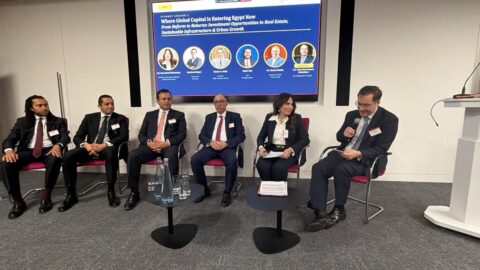
Randa El Menshawy: Egypt Promotes its Smart Cities as Long-Term Investment Opportunities
Eng. Randa El Menshawy, Minister of Housing, Utilities, and Urban Communities, emphasized that Egypt is promoting its new cities and its ambitious urban expansion program as a long-term investment opportunity, backed by strong demand for housing. This coincides with the state’s execution of modern infrastructure and an increasing expansion of private sector participation in various types of real estate investment within these cities.
The Minister stressed that Egypt’s urban development strategy aims to establish sustainable and investment-attractive communities, supported by integrated infrastructure and diverse economic activities, thereby enhancing the capacity of new cities to attract both residents and investments, which drives economic growth toward achieving sustainable development.
She added that housing projects are being implemented in parallel with the development of infrastructure, utilities, public services, and economic activities, ensuring the readiness of new cities to attract residents and investments from their earliest stages.
She noted that Egypt’s substantial investments in infrastructure and public utilities over the past decade, coupled with sustained population growth and rising housing demand, have significantly enhanced the country’s appeal as a destination for both regional and international investment.
El Menshawy also emphasized that the real estate sector in Egypt continues to benefit from robust demand driven by population growth and increasing housing needs, which creates promising investment opportunities in residential, commercial, and mixed-use projects.
Concluding her address, the Minister said:
“Egypt’s message to investors is clear: we are not merely offering individual projects, but presenting integrated smart cities and long-term investment opportunities supported by modern infrastructure, strong market fundamentals, and a steadfast commitment to sustainable growth.”
Ahmed Kouchouk: Debt Swaps and Linking Them to Sustainable Development
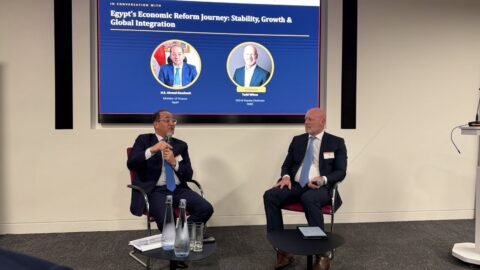
Ahmed Kouchouk, Minister of Finance, confirmed that Egypt is intensifying its efforts to develop public debt management mechanisms to link debt reduction with the achievement of sustainable development goals.
He noted that the government is exploring innovative debt-swap mechanisms aimed at channeling resources toward priority sectors, particularly education, healthcare, and human capital development.
He explained that Egypt has already successfully implemented a number of debt-swap programmes with international partners, enabling additional resources to be directed toward development initiatives with lasting economic and social benefits.
He added that these mechanisms create shared value for both creditor and debtor countries by transforming debt obligations into investments that support sustainable development and long-term economic growth.
He also noted that Egypt contributed to the launch of a global platform dedicated to debt swaps and innovative financing solutions, aimed at facilitating knowledge sharing and the exchange of best practices among participating countries.
He stressed that the government continues to collaborate with international partners to develop more effective financing mechanisms that align debt management strategies with national development priorities.
Central Bank: Exchange Rate Stability and Enhancing Foreign Investment Attractiveness
Rami Aboulnaga, Deputy Governor of the Central Bank of Egypt, affirmed that the Central Bank remains committed to maintaining stability in the foreign exchange market and enhancing Egypt’s attractiveness to foreign investors, as part of broader efforts to strengthen the resilience of the Egyptian economy amid regional and global challenges.
His remarks came during a series of high-level meetings with leading global financial institutions and international investors on the sidelines of the “Egypt Forward: Investment Opportunities and Sustainable Economic Reform” conference, organized by the British Egyptian Business Association (BEBA) in London from June 3–5, 2026.
The meetings included in-depth discussions with investors from HSBC, focusing on recent developments in Egypt’s monetary policy and the Central Bank’s efforts to preserve macroeconomic stability and maintain a supportive environment for investment. Participants also reviewed trends in the foreign exchange market and the continued growth of foreign currency inflows.
Aboulnaga also met with investors from Jefferies to discuss the outlook for the Egyptian economy, the banking sector’s role in supporting growth and investment, and opportunities to strengthen Egypt’s appeal to international financial institutions.
The Deputy Governor of the Central Bank also met with officials from Vodafone Egypt, including CEO Mohamed Abdullah and Ayman ElSaadany, to discuss measures to support the telecommunications sector and accelerate digital transformation. The meeting also explored opportunities to expand cooperation in financial technology and digital innovation, in line with Egypt’s efforts to advance the digital economy and promote financial inclusion.
Aboulnaga noted that Egypt has faced a series of rapidly evolving geopolitical and regional challenges in recent years. He emphasized that the monetary and economic reforms implemented by the government have strengthened the economy’s resilience, enabling it to absorb external shocks and limit their impact on economic performance.
He explained that the Central Bank adopts a flexible approach to monetary policy aimed at maintaining monetary stability, enhancing exchange rate flexibility, and increasing the economy’s resilience to external shocks, while simultaneously supporting market confidence.
He noted that current priorities include strengthening price stability, maintaining the soundness of the banking sector, advancing financial inclusion and digital transformation, as well as supporting foreign investment attraction.
He concluded by affirming that the Central Bank continues to manage these priorities through balanced policies aimed at strengthening overall macroeconomic stability, improving the efficiency of financial markets, and creating a more attractive environment for both local and international investment, thereby supporting sustainable growth and development objectives.
Khaled Nosseir: Egypt is a Stable and Attractive Investment Destination Despite Regional Challenges
Khaled Nosseir, Chairman of the Egyptian British Business Association (BEBA), affirmed that Egypt has maintained its position as a stable and attractive destination for investment despite the challenges and disturbances witnessed by the region.
He explained that Egypt has continued to advance a comprehensive economic reform agenda that has strengthened economic resilience and improved the competitiveness of the national economy. He added that these reforms have reinforced investor confidence, supported macroeconomic stability, and enhanced the overall investment climate.
He added that, in his view, Egypt remains one of the region’s most attractive investment destinations, supported by its diversified economy, large domestic market, strategic geographic location, and proven ability to withstand external shocks. He also highlighted the government’s ongoing efforts to strengthen the legislative and regulatory framework governing investment.
He stressed that the conference is being held at a time when Egypt is advancing a broad agenda of economic and structural reforms aimed at strengthening competitiveness, attracting higher levels of foreign direct investment, and expanding the role of the private sector in driving economic growth.
Ambassador Ashraf Swelam: An Anticipated Strategic Partnership Between Egypt and Britain
Ambassador Ashraf Swelam, Ambassador of Egypt to the United Kingdom, announced that Egypt and United Kingdom intend to elevate the level of their bilateral relations to a strategic partnership during the upcoming visit of British Prime Minister Keir Starmer to Cairo, scheduled for July 9, 2026.
He explained that the anticipated agreement is a qualitative milestone in the course of relations between the two countries, as it will provide a comprehensive framework to expand cooperation horizons in multiple vital sectors, emphasizing that the strategic partnership represents “the highest level of bilateral coordination.”
He pointed out that United Kingdom remains one of the largest investing countries in Egypt, with its cumulative investments reaching approximately USD 22 billion.
He added that the current BEBA mission aims to reinforce these foundations, attract more British investments, and explore new partnerships between the business communities in both countries.
He also stressed that current security and regional challenges prove the importance of close coordination between Cairo and London to support stability, economic development, and regional security.
British Ambassador in Cairo: Egypt’s Reforms Enhance Investment Attractiveness
British Ambassador to Egypt, Mark Bryson-Richardson, stated that relations between the United Kingdom and Egypt are heading toward a more strategic and integrated phase.
He emphasized that Egypt continues to implement economic and structural reforms aimed at modernizing the investment framework, enhancing transparency, and aligning regulatory practices with international best standards.
He explained that economic relations between Egypt and the United Kingdom are built on a strong and long-standing foundation, providing significant scope for further expansion in trade and investment.
He noted that bilateral trade exceeds EUR 5 billion annually and highlighted the considerable potential to deepen commercial ties and increase two-way investment flows.
He added that the upcoming visit of British Prime Minister Keir Starmer to Cairo is expected to provide fresh momentum for bilateral relations and open new avenues for economic cooperation.
PwC: Egypt is a Strategic Market and a Partner for Long-Term Growth
Marco Amitrano, Senior Alliance Partner at PricewaterhouseCoopers (PwC) in the UK and the Middle East, affirmed that Egypt represents a strategic market and an important partner for long-term growth.
He noted that lasting partnerships are built not only on shared successes, but also on the ability to work together through challenges and deliver transformative projects with long-term impact.
He emphasized that cooperation with Egypt is driven by a shared commitment to innovation, economic transformation, and sustainable development.
He added that relations between the United Kingdom and Egypt have strengthened considerably in recent years and are well positioned for further growth as businesses on both sides explore new investment and commercial opportunities across a wide range of sectors.
PricewaterhouseCoopers: Egypt is a Promising Regional Hub for Exporting Technological Services and Digital Transformation
Maged Ezzeldeen, Senior Partner – Deals Leader of PwC Egypt confirmed that the company is entering a new phase of expansion in the Egyptian market, as it approaches 120 years of work in supporting commercial activities and professional services globally, with its continuous commitment to serving the Egyptian market and meeting clients’ needs.
Speaking on the sidelines of the conference, Ezzeldeen noted that PwC plays a key role in supporting business missions and trade delegations across international markets, helping to strengthen commercial ties and promote cross-border investment opportunities.
He added that this role extends to fostering collaboration between governments and the private sector, while supporting investors and businesses in identifying and pursuing new opportunities.
He highlighted the company’s participation in major international events, including COP26, underscoring its commitment to supporting dialogue on global economic and sustainability issues. He added that British Prime Minister Keir Starmer’s upcoming visit to Cairo next month is expected to provide fresh momentum for economic cooperation between Egypt and the United Kingdom.
He welcomed the growing pace of bilateral engagement, expressing confidence that the United Kingdom can further expand its investment presence in Egypt and strengthen its position among the country’s leading foreign investors.
He added that the company is increasingly expanding its investments in Egypt, explaining that the Technology Innovation Hub, which was opened about two and a half years ago, represents an advanced platform to support innovation and develop technological solutions—not only to serve Egypt and the Middle East region but also to support markets such as the United Kingdom, Germany, and the Netherlands through exporting services.
He emphasized that PwC’s operations in Egypt have evolved beyond traditional audit, tax, and advisory services to include advanced capabilities in cyber technology, artificial intelligence, and digital transformation. He noted that this expansion reflects the growing sophistication of Egypt’s business environment and supports the country’s emergence as a regional center for knowledge-based and technology-enabled services.
Ezzeldeen added that economic cooperation between Egypt and the United Kingdom is expected to deepen further, supported by expanding investment opportunities and rising interest from international companies seeking to strengthen their presence in one of the region’s most dynamic markets.
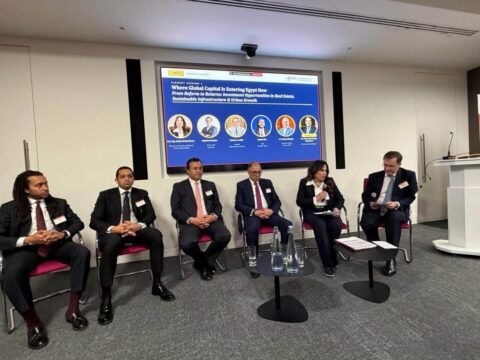
Ahmed Shalaby: The Red Sea is Transforming into a Regional Hub for Energy, Tourism, and Technology
Dr. Ahmed Shalaby, Chairman of the Housing Committee in the House of Representatives and CEO, Managing Director of “Tatweer Misr,” affirmed that the Red Sea coast possesses capabilities that qualify it to become a major regional hub for tourism, renewable energy, and digital infrastructure, which opens wide horizons for international investors.
He explained that Egypt has made significant progress in infrastructure development, laying the foundation for expanding economic activity beyond the Nile Valley through the creation of integrated economic and tourism hubs.
He pointed out that Galala City on the Gulf of Suez represents a model for fourth-generation cities, with expansions that include residential towers, hotels, and conference centers, supported by strong investment demand.
He added that Egypt possesses significant renewable energy potential, particularly in the south of the country and along the Red Sea coast. These advantages create opportunities for the development of data centres and energy-intensive industries, while strengthening Egypt’s long-term prospects of becoming a net exporter of clean energy to Europe.
He stressed that the real estate sector has evolved into a key driver of integrated development, extending beyond the provision of housing to encompass fully integrated communities that incorporate healthcare, education, hospitality, and other essential services.
He also emphasized the importance of expanding modern financing instruments, including Real Estate Investment Trusts (REITs), alongside regulatory reforms aimed at enhancing transparency, deepening market efficiency, and attracting greater investment into the sector.
Bedeir Rizk: International Cooperation Boosts Green Transformation in Egyptian Real Estate
Eng. Bedeir Rizk, CEO of “PARAGON | ADEER”, stated that sustainability has evolved from a niche concept into a core component of real estate development in Egypt, becoming increasingly embedded in project planning and development strategies.
He explained that, in the past, developers often pursued sustainability certifications without sufficient market recognition or financial incentives. However, this landscape has changed considerably as government policies have advanced and financial institutions have shown growing interest in supporting green and sustainable projects.
He noted that one of the most significant developments has been the introduction of government incentives tied to sustainability standards, including higher permissible built-up areas for projects that meet certified sustainability requirements. According to Rizk, these measures have helped turn sustainability from a voluntary objective into a tangible value proposition supported by clear incentives.
He added that green finance is also gaining momentum, citing initiatives by banking institutions, including the National Bank of Egypt, to offer preferential financing terms for sustainable projects. However, he noted that the market for such instruments remains at an early stage of development.
He stressed that the current phase requires expanding tax incentives, developing regulatory frameworks, and increasing green financing tools, confirming that the general trend reflects a clear shift in investment policies toward sustainability.
He concluded by stressing that international partnerships, especially with British institutions, can contribute to accelerating the pace of green transformation in the Egyptian real estate sector.
Ibrahim El Missiri: The Red Sea is a Global Investment Destination Backed by Infrastructure and Tourism
Ibrahim El Missiri, CEO of “Somabay” Group, stated that Egypt’s Red Sea coast has emerged as an increasingly attractive destination for investment, supported by substantial infrastructure upgrades, the continued growth of tourism activity, and expanding opportunities for international partnerships.
He explained that sustained investments in roads, airports, and tourism infrastructure have significantly strengthened the region’s competitiveness, particularly through improved connectivity between Cairo and key tourism destinations along the Red Sea.
He added that the planned High-Speed Electric Train network is expected to further enhance regional connectivity, creating new opportunities for tourism, real estate development, and broader economic activity.
El Missiri also added that “Somabay” project has transformed from a traditional tourism destination into an integrated, mixed-use community comprising hotels, marinas, golf courses, and residential communities.
He emphasized that growth opportunities are no longer limited to traditional tourism but extend to sports and medical tourism, thereby extending the tourist season and increasing economic returns.
He stressed that the Egyptian market is open to international partnerships, and that the ideal model for development has become reliant on cooperation between local and global expertise in design, management, and execution.
Conclusion
The “Egypt Forward” conference highlighted Egypt’s ongoing efforts to strengthen its global investment profile through a combination of economic reform, infrastructure development, urban expansion, and international engagement. The discussions underscored the government’s focus on creating a more competitive investment environment while deepening partnerships with global investors and business leaders.
The conference also demonstrated how Egypt’s development strategy is increasingly centred on integrating sustainability, infrastructure, tourism, energy, and urban development within a unified growth framework. Supported by regulatory reforms, evolving financing mechanisms, and expanding international partnerships, this approach is helping position Egypt as a diversified investment destination with opportunities across multiple sectors.