As Egypt continues to strengthen its position within the global investment landscape, London has provided a prominent platform to showcase the country’s ongoing economic reform agenda and emerging investment opportunities. These discussions took place during the “Egypt Forward: Investment Opportunities and Sustainable Economic Reform” conference, organized by the British Egyptian Business Association (BEBA) from June 3–5, 2026.
The conference brought together ministers, government officials, representatives of financial institutions, and investors from Egypt and the United Kingdom for a broad dialogue focused on deepening economic cooperation and expanding investment opportunities. Discussions were accompanied by repeated emphasis on the growing resilience of the Egyptian economy in navigating regional and global challenges.
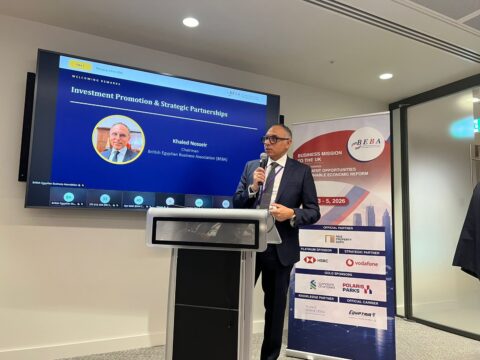
Khaled Nosseir: Existing Investments Reflect the Strength of the Egyptian Economy
Khaled Nosseir, Chairman of the Egyptian British Business Association (BEBA), stated that the scale of investments currently underway in Egypt reflects growing confidence in the country’s economic fundamentals, resilience, and ability to sustain growth despite regional and global challenges. He noted that these efforts coincide with the government’s broader strategy to attract foreign investment and deepen economic ties with the United Kingdom.
Speaking at the opening of the conference’s second day, Nosseir explained that discussions are centred on three key themes: digital infrastructure, innovation and smart cities, and urban development. He noted that these sectors are expected to play a leading role in shaping future investment cooperation between Egypt and the United Kingdom.
He added that the second day’s agenda features a session titled “Digital Egypt: Infrastructure, Innovation, and Investment Opportunities,” focusing on digital transformation initiatives and investment prospects in the technology sector. Another session, “Building Egypt’s Future Cities,” examines urban development strategies and new city projects aimed at accommodating population growth and enhancing the quality of services.
Minister of Housing: Egypt Possesses Strong Investment Advantages Making It One of the Most Attractive Markets for Investment
For her part, Eng. Randa El Menshawy, Minister of Housing, Utilities, and Urban Communities, emphasized that Egypt offers compelling investment opportunities supported by major national projects, extensive infrastructure development, and the continued expansion of new cities. She noted that these developments have helped create integrated urban centres capable of supporting both economic growth and long-term investment.
She made the remarks during a high-level ministerial dialogue held on the sidelines of a reception hosted by the Egyptian Embassy in London, attended by Ahmed Mr. Kouchouk, Minister of Finance, Dr. Mohamed Farid, Minister of Investment and Foreign Trade, as well as leading investors and business representatives.
El Menshawy explained that the Ministry of Housing offers diverse investment opportunities including urban development, commercial, administrative, and service activities, in addition to infrastructure and utility projects, providing multiple options for investors according to various investment trends.
She added that the Ministry has compiled a comprehensive portfolio of investment opportunities across Egypt’s new cities. The portfolio has been shared with both the Egyptian Ambassador to the United Kingdom and the British Ambassador to Egypt as part of efforts to increase investor awareness and facilitate engagement with potential British investors.
She emphasized that investors are regarded as essential partners in Egypt’s development agenda. She added that the government works closely with investors to address challenges as they arise through direct engagement and coordination among relevant authorities, helping to ensure the smooth implementation of projects and the continuity of business operations.
She noted that over the past years, the government has taken tangible steps to improve the investment climate, which included simplifying procedures, developing the land allocation system, accelerating the issuance of licenses and approvals, and expanding digital services, thereby reducing the time and effort required to start and implement projects.
Furthermore, she explained that the Ministry operates according to an institutional methodology that begins with preparing technical and economic studies and determining the appropriate investment and partnership models, reaching the stages of allocation, contracting, and execution, ensuring the highest levels of efficiency and transparency.
She stressed that the success of investment projects in Egypt’s new cities is closely linked to the country’s broader development objectives. She reaffirmed the government’s commitment to supporting investors through continuous engagement, project monitoring, and the timely resolution of challenges, helping to strengthen confidence in Egypt’s investment environment and enhance its competitiveness.
Concluding her remarks, the Minister emphasized that Egypt offers more than investment opportunities alone. She highlighted the country’s modern infrastructure, strong government commitment to investment, and institutional framework designed to streamline procedures and accelerate project implementation.
These advantages, she noted, position Egypt’s new cities as attractive destinations for long-term investment and sustainable growth.
Minister of Investment and Trade: Structural Reforms to Enhance Competitiveness and Exports
In turn, Dr. Mohamed Farid, Minister of Investment and Foreign Trade, confirmed that the government is implementing an integrated package of structural reforms aimed at enhancing the competitiveness of the national economy, deepening the industrial base, increasing exports, and improving the business environment, thereby supporting the attraction of local and foreign investments and achieving sustainable economic growth.
He explained that achieving Egypt’s goal of increasing merchandise exports to USD 100 billion will require expanding domestic manufacturing capacity, deepening industrial localization, and increasing the share of high-value-added products. He added that these efforts are being coordinated with relevant government entities to identify priority sectors and create the conditions needed to support production growth and export expansion.
He pointed out that managing the foreign trade file requires long-term strategic planning similar to successful international models, stressing that enhancing exports does not rely solely on industrial production, but rather requires an integrated system that includes logistical services, the banking sector, finance, and digital transformation.
The Minister revealed the existence of promising opportunities for export and investment in a number of foreign markets, especially in Eastern Europe, explaining that some challenges related to the ease of money transfers and banking services represent one of the files currently being addressed in cooperation with competent authorities.
He added that the Ministry is focusing heavily on removing procedural obstacles facing the business community, including challenges related to the implementation of shareholders’ agreements and certain regulatory procedures for companies, emphasizing that investment inherently relies on trust and the ability to implement reforms in a practical and sustainable manner.
He explained that the Ministry is developing a unified digital platform that will provide investors with access to investment opportunities and available land plots through a single gateway, enabling greater transparency and easier access to information. He stressed that the government’s role is to make data and opportunities readily available and streamline procedures, while investment appraisal and project feasibility assessments remain the responsibility of investors.
He emphasized that improving the ease of doing business remains a central component of Egypt’s economic reform agenda, noting that operational challenges related to capital increases, mergers, and acquisitions can have a direct impact on investment decisions and business expansion plans.
Farid added that the long-term objective is to establish an institutionalized investment environment in which investors can complete transactions through clear, transparent, and technology-driven procedures without relying on direct intervention from ministers or senior government officials.
Farid added that the Ministry is currently reviewing a number of procedures related to company incorporation, capital increases, and share issuances. He noted that the involvement of multiple authorities in certain transactions can result in unnecessary delays, and that the government is working to address these challenges through greater digital integration and improvements in institutional processes.
He emphasized that investment reform is a continuous and long-term process, the benefits of which emerge gradually through a more efficient business environment, stronger investor confidence, and higher levels of investment activity.
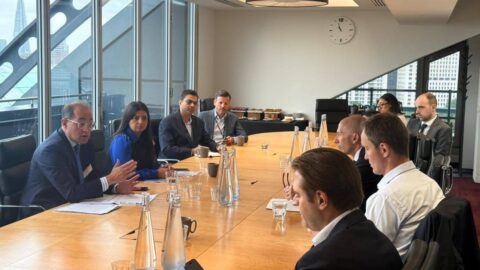
Minister of Finance: Our Economy is on the Right Track, and We Aim to Boost Investment and Export
Speaking during a series of investor meetings organized by Jefferies, J.P. Morgan, and HSBC on the sidelines of the conference, Mr. Ahmed Kouchouk, Minister of Finance, stated that Egypt’s economy continues to move in a positive direction, supported by policies aimed at expanding production, increasing exports, and sustaining long-term growth.
Kouchouk welcomed the growing interest shown by international investors in Egypt’s economic outlook and investment opportunities, noting that this engagement reflects increasing confidence in the country’s reform trajectory and future prospects.
He emphasized that the government remains committed to strengthening Egypt’s position as an attractive destination for domestic and foreign investment, highlighting the country’s strategic location, extensive infrastructure network, large and expanding market, and young workforce as key competitive advantages.
The Minister noted that economic indicators for the first nine months of the current fiscal year point to continued improvements in economic activity. He added that ongoing efforts are focused on creating a more enabling business environment and expanding the role of the private sector as a key driver of growth.
He further explained that reforms in the tax, customs, and real estate sectors are designed to simplify procedures and reduce costs for businesses, while complementing broader investment incentives. At the same time, the government is working to diversify financing instruments and funding sources, while maintaining a downward trajectory for public-sector debt levels.
Kouchouk also highlighted the expansion of debt-swap programmes and innovative financing mechanisms, particularly those aimed at supporting human development and other strategic priorities.
Concluding his remarks, the Minister stressed that Egypt is entering a new phase characterised by stronger private-sector participation, continued structural reform, and efforts to build a more competitive, resilient, and investment-friendly economy.
Central Bank of Egypt: Confidence and Swift Decision-Making are the Foundation of Economic Resilience
Mr. Rami Aboulnaga, Deputy Governor of the Central Bank of Egypt, stated that maintaining a balance between monetary stability and exchange-rate flexibility has strengthened the economy’s ability to absorb external shocks and navigate periods of heightened uncertainty. He noted that recent global and regional crises have demonstrated that effective communication, institutional credibility, and timely decision-making are as important as the policies themselves in preserving economic stability.
Aboulnaga emphasized that confidence has become a critical pillar of economic resilience and investment attraction, explaining that investors increasingly assess the quality of institutions and their ability to respond to challenges before evaluating economic indicators. He added that Egypt’s response to successive global shocks reflected a growing capacity among economic institutions to adapt quickly and make informed policy decisions.
He noted that the Central Bank has been modernizing its monetary policy framework since 2016, with a gradual transition toward inflation targeting as the primary anchor of monetary policy. According to Aboulnaga, this process required sustained engagement with markets and clear communication to strengthen policy credibility and improve expectations management.
He further explained that taking difficult decisions at the appropriate time helped reduce medium-term risks to the economy, while policy flexibility enabled authorities to mitigate the impact of geopolitical and regional developments. He stressed that the effectiveness of economic policy depends not only on the decision itself but also on its timing and implementation.
The Deputy Governor also highlighted transparency and clear communication as essential components of sound economic management, warning that uncertainty and inconsistent messaging can undermine confidence and affect investment decisions.
Concluding his remarks, Aboulnaga reaffirmed that the Central Bank’s priorities remain focused on preserving price stability, safeguarding the soundness of the banking sector, expanding financial inclusion and digital transformation, and supporting investment through policies that reinforce macroeconomic stability and strengthen financial market efficiency.
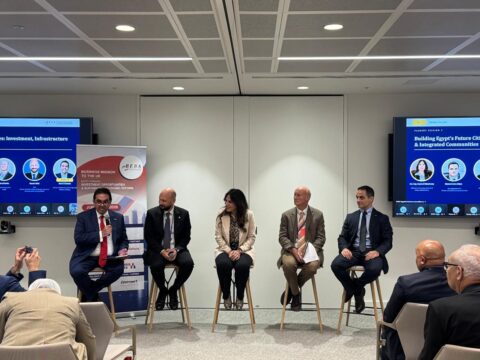
Future Cities: Integrated Investments Driving Urban Growth
As part of the second-day activities of the “Future Egypt” Conference, a session titled “Building Future Cities in Egypt: Investment, Infrastructure, and Integrated Communities” addressed the role of urban development as a key driver for attracting long-term investments to Egypt.
Eng. Randa El Menshawy, Minister of Housing, Utilities, and Urban Communities, emphasized that new cities and partnerships with the private sector constitute a fundamental pillar for creating promising investment opportunities. She highlighted the expansion of integrating healthcare, education, and scientific research services into urban master plans, alongside working on integrated projects such as the Medical City in the New Capital.
Furthermore, she stressed that the state is expanding the private sector’s role in infrastructure, utilities, asset management, and industrial zones, thereby supporting the creation of integrated and sustainable urban communities.
For their part, private sector representatives confirmed that economic reforms and infrastructure development have enhanced the attractiveness of the Egyptian market. The Managing Director of Polaris explained that industrial real estate has significantly benefited from upgrades to ports, roads, and logistics networks.
Meanwhile, the representative of Orascom Development Holding pointed out a market shift toward the “integrated cities” model, which seamlessly combines residential living with services and economic activities.
Additionally, the representative of Savills noted that Egypt’s rapid population growth is a powerful catalyst driving the expansion of new cities. He described this expansion as an economic necessity to absorb the rising demand for housing and services, particularly in light of the substantial growth taking place in Greater Cairo.
In conclusion, participants affirmed that Egypt’s urban development program represents one of the most vital pillars for supporting the economy and attracting investment, accomplished through building modern cities capable of accommodating population growth, enhancing the quality of life, and creating sustainable economic opportunities.
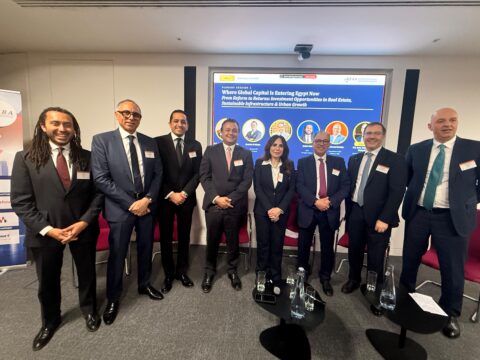
Conclusion
The discussions at the “Egypt Forward: Investment Opportunities and Sustainable Economic Reform” conference highlighted a broad alignment across government institutions around the priorities of economic reform, private-sector development, and investment promotion. From infrastructure and smart cities to industrial development, exports, and monetary stability, participants emphasized the importance of sustaining reforms that strengthen competitiveness and support long-term growth.
Against a backdrop of global economic uncertainty, the conference served as a platform to reaffirm Egypt’s commitment to building a more resilient and investor-friendly economy. The recurring message throughout the event was that ongoing reforms are part of a long-term strategy aimed at enhancing macroeconomic stability, attracting productive investment, and deepening economic partnerships with international markets, particularly the United Kingdom.
Nile Property Expo participated as an official sponsor of the conference under the leadership of Dr. Bassem Kalila, Chairman of Expo Republic and founder of Nile Property Expo, reflecting its continued support for initiatives that promote investment opportunities, strengthen business engagement, and foster closer ties between Egyptian and international investors.