Tatweer Misr, in collaboration with the MIT Kuo Sharper Center for Prosperity & Entrepreneurship at the Massachusetts Institute of Technology (MIT), announced the launch of a new business case study developed by the Center titled “How Tatweer Misr Changed the Real Estate Developer Playbook, and the Choices It Now Faces, Invest-Gate reports.
” Unveiled during the Pitch Night and Awards Ceremony of the 7th edition of the Tatweer Misr Innovation Competition, the case study examines how Tatweer Misr redefined the traditional real estate development model through innovation, ESG integration, and a multi-stakeholder operating philosophy. It explores the strategic decisions, leadership mindset, and organizational challenges involved in preserving the company’s entrepreneurial culture, values, and long-term sustainability while scaling its operations and expanding into new markets.
About the MIT Kuo Sharper Center
The MIT Kuo Sharper Center develops case studies that examine important leadership and organizational challenges facing entrepreneurs and businesses in growth markets. Rather than documenting successful companies, these cases are designed to provoke discussion around the strategic decisions that shape long-term prosperity.
Strategic Collaboration with MIT
The launch of the Business Case Study represents the latest milestone in the longstanding strategic collaboration between Tatweer Misr and the MIT Kuo Sharper Center for Prosperity & Entrepreneurship at the Massachusetts Institute of Technology (MIT) in Cambridge, Massachusetts. As part of this collaboration, MIT welcomed a Tatweer Misr delegation led by Dr. Ahmed Shalaby, Co-founder, President, and CEO, for an academic discussion of the case study with students, researchers, and Fellows, as well as a Fireside Chat exploring the strategic decisions, leadership philosophy, and innovation-led business model that have enabled Tatweer Misr to redefine integrated urban development through sustainability and long-term stakeholder value.
The Business Model and Long-Term Value
The case study examines how Tatweer Misr has built a business model that creates long-term value for employees, clients, business partners, shareholders, and the broader economy. Rather than following a traditional transactional approach, the company adopted a human-centric operating model built on shared values, entrepreneurial leadership, lean organizational structures, and strategic collaboration with SMEs.
The Core Challenge
At its core, the study explores a question relevant to companies across growth markets: how can organizations scale without compromising the culture, values, and entrepreneurial mindset that drove their success?
Development of the Case Study
The case study forms part of the MIT Kuo Sharper Center’s broader work examining how businesses in growth markets create sustainable prosperity through innovation-driven entrepreneurship and multi-stakeholder value creation. It was developed through a series of workshops and working sessions between the MIT Kuo Sharper Center team, led by Dr. Dina H. Sherif, and Tatweer Misr’s leadership team, led by Dr. Ahmed Shalaby. The collaborative process documented and analyzed Tatweer Misr’s business model from both academic and practical perspectives, offering an Egyptian business case that demonstrates how innovation, entrepreneurship, and sustainable urban development can be successfully integrated into a scalable operating model.
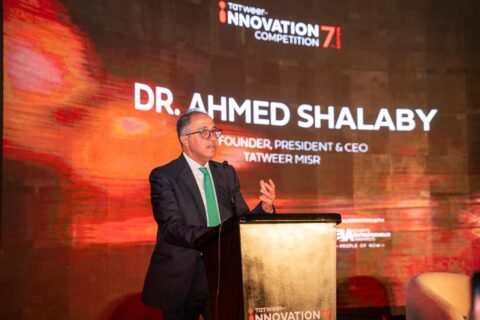
Statement by Dr. Ahmed Shalaby
“Looking back to when we co-founded Tatweer Misr just twelve years ago, I would never have imagined that our journey would become a business case study developed by MIT and taught to its students and academic community. This is a proud milestone that reflects how far Tatweer Misr has come in just twelve years and reinforces that building a purpose-driven, innovation-led culture can create lasting impact beyond business performance,” said Dr. Ahmed Shalaby, Co-founder, President, and CEO of Tatweer Misr. “As we continue to grow and expand into new markets, our greatest challenge is ensuring that institutionalization strengthens, rather than replaces, the entrepreneurial mindset, judgment, and values that define our organization. This case study offers an analytical perspective on how to preserve that balance while scaling sustainably.”
Operational Resilience and Sustainability
Throughout the case development process, Tatweer Misr’s operating model demonstrated how its practices strengthened the company’s resilience during periods of macroeconomic uncertainty. For example, Tatweer Misr enhanced portfolio-wide resilience by fostering long-term, win-win partnerships with business partners and local and international suppliers, while investing early in smart utility and resource management systems at its flagship Il Monte Galala development. The Business Case Study demonstrates how integrating sustainability into the company’s operating model, alongside strengthening local value chains, contributed to long-term operational resilience and commercial performance.
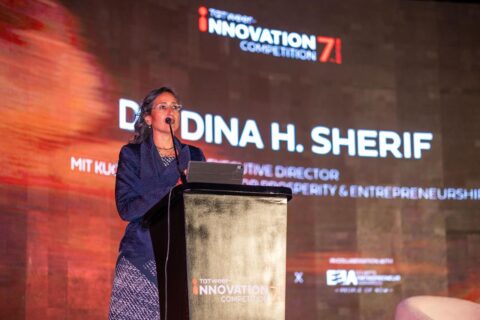
Statement by Dr. Dina H. Sherif
“Tatweer Misr challenged one of the most deeply embedded assumptions in business: that companies exist primarily to maximize shareholder value. Instead, it built an operating model around creating value for multiple stakeholders,” said Dr. Dina H. Sherif, Executive Director of the MIT Kuo Sharper Center. “That makes it an important case for leaders everywhere asking how businesses can grow while remaining true to the principles that made them successful.”
Continued Cooperation with MIT
Tatweer Misr regularly hosts MIT Kuo Sharper Fellows during their visits to Egypt, providing them with first-hand exposure to practical applications of innovation, sustainability, and integrated urban development. Choosing Tatweer Misr as the subject of this business case study reflects the international recognition of its business model and reinforces its position as a leading Egyptian example of integrated, sustainable urban development, while contributing to the global dialogue on the future of cities, entrepreneurship, and corporate leadership.