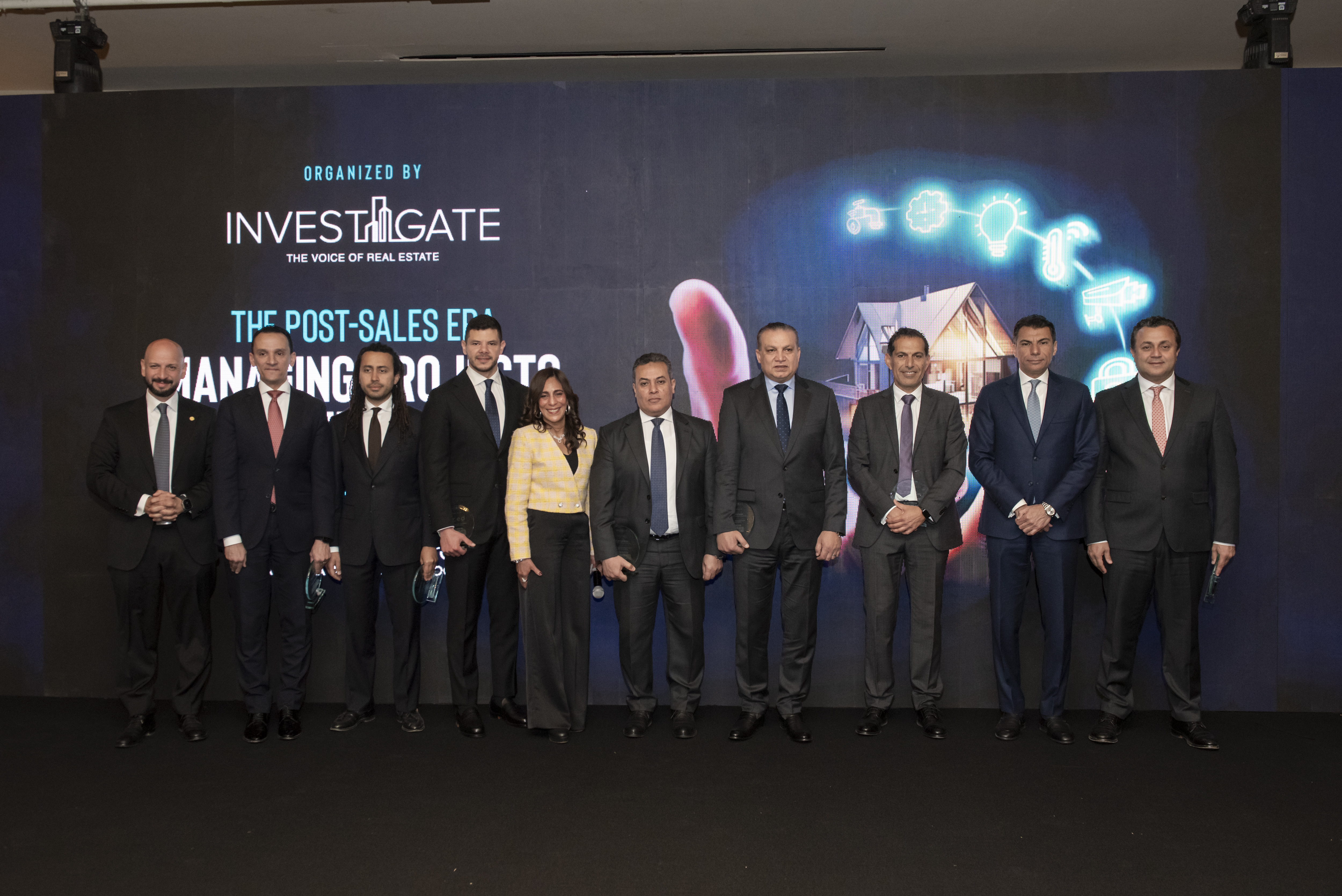
Invest-Gate held its 27th roundtable, titled “The Post-Sales Era: Managing Projects, Communities & Cities,” on Monday, February 16, 2026, at the Nile Ritz-Carlton – Alf Leila We Leila Ballroom.
The roundtable brought together senior government officials, real estate developers, operators, advisory and asset management firms, property and facility management companies, investors, financiers, public-sector stakeholders, and technology enablers to examine how projects, communities, and cities can be effectively managed beyond delivery.
The session was moderated by Mr. Amr Elkady, Founder & Managing Director of AKD Advisory, and featured distinguished participants, including: Dr. Eng. Abdelkhalek Ibrahim, Member of the House of Representatives; Dr. Mostafa Mounir, CEO of the Tourism Development Authority; Eng. Khaled Sedeik, Chairman of the Urban Development Fund; Dr. May Abdel Hamid, CEO of the Social Housing and Mortgage Finance Fund; and Mr. Mohamed Selim, General Manager of Research and Business Development at the Egyptian Exchange.
Additional participants included: Eng. Ayman Amer, Group General Manager of SODIC; Mr. Ibrahim El Missiri, Group CEO of Somabay; Eng. Hazem Helal, CEO of Orascom Real Estate; Eng. Bedeir Rizk, CEO of PARAGON | Adeer; Eng. Ahmed Mansour, CEO of Cred Developments; Eng. Muhannad Saleh, Executive General Manager of Horizon Operation and Management S.A.E; Eng. Mohammed Azmy Ateia, Director of Smart Cities at Orange Egypt; Mr. Omar El Tayebi, CEO of TLD – The Land Developers; Mr. Ahmed Kira, Managing Director of Horof Group for Touristic Projects; Mr. Tarek Mourad, General Manager of Cairo Marriott Hotel; Dr. Mina Fayek Fouad, CEO of Egypro FME; Mr. Mohamed Galal, Chairman of TSM Asset Management; and Eng. Ahmed Ehab, CEO of Madaar Developments.
Key Recommendations
First: Establishing a Robust Regulatory Framework for the Post-Sales Phase
– Establishing an independent real estate regulatory authority responsible for setting clear operational standards, introducing professional classification systems for property management companies, and overseeing financial and operational performance to ensure investor and resident protection while supporting long-term project sustainability.
– Launching an official House Price Index (HPI) and defining benchmark price ranges by region to enhance market transparency and support informed investment, valuation, and financing decisions.
– Reviewing legislative and tax frameworks related to leasing and fractional ownership to encourage formal occupancy, increase recurring revenues, and reduce informal operations.
Second: Transitioning Toward a Long-Term Development and Operational Model
– Shifting from a rapid-sales model to a sustainable development approach, whereby projects are viewed as income-generating assets rather than one-time sale products, with success measured by post-handover cash flow stability.
– Involving operators at the design stage to align architectural planning with operational requirements and enhance efficiency.
– Appointing an asset manager from day one to ensure operational readiness upon delivery and continuous monitoring of performance and occupancy levels.
– Establishing clearly defined Key Performance Indicators (KPIs) and Service Level Agreements (SLAs) to ensure accountability and transparency.
– Retaining 10–20% of the project as rental, hospitality, or commercial components to generate sustainable income streams, enhance long-term asset value, and support long-term operational funding, drawing on international practices such as the French development model, which emphasizes maintaining recurring rental income within projects.
Third: Enhancing Financial Sustainability and Maximizing Recurring Revenues
– Diversifying income streams through rentals, operational services, hospitality components, advertising, and recycling initiatives instead of relying solely on unit sales and deposits.
– Professionally managing maintenance deposits by investing them strategically and allocating returns toward ongoing maintenance while developing alternative revenue sources to reduce financial pressure on residents.
– Aligning operational readiness with exit strategies and institutional investment objectives, as operational excellence has become a decisive factor in attracting investment funds and international investors.
-Issuing financing bonds for real estate projects within clear regulatory frameworks to support long-term operations and enhance developers’ financial sustainability.
– Prioritizing sustainable investment and long-term partnerships by selecting strategic partners committed to operational excellence and sustainability standards.
Fourth: Integrating Technology and Advancing Digital Transformation
– Embedding smart infrastructure at the design stage, including surveillance systems, centralized control platforms, and predictive maintenance capabilities.
– Leveraging artificial intelligence (AI) and data analytics to optimize occupancy rates, improve service pricing strategies, predict system failures, and enhance decision-making.
– Developing centralized digital platforms for city and community management to improve oversight, customer experience, and financial transparency.
Fifth: Investing in Human Capital and Building a Professional Operational Culture
– Establishing specialized academic and vocational programs focused on asset management and real estate operations to address the growing talent gap.
– Enhancing workforce capabilities to align with increasing technological integration in community and city management.
– Institutionalizing operations as a core component of the developer’s identity to strengthen long-term reputation and asset performance.
Sixth: Supporting Hospitality Components and Promoting Real Estate Export
– Expanding investment in hospitality components and branded residences as a key source of foreign currency revenue.
– Encouraging real estate export to foreign buyers through regulatory and tax incentives to increase external demand and support market stability.
– Ensuring fully finished unit delivery standards to preserve operational quality and long-term market value.
Seventh: Operating Cities as Integrated Systems
– Linking quality-of-life indicators to measurable operational performance metrics, including maintenance standards, response times, and service continuity.
– Adopting integrated planning approaches for mixed-use developments to ensure coordination between residential, commercial, service, and recreational components.
The roundtable was officially sponsored by Madinet Masr. Platinum Sponsors included Somabay, PARAGON | Adeer, and Cred Developments. Gold Sponsors were Orange Egypt, TLD – The Land Developers, and Egypro FME, while Silver Sponsors included TSM Asset Management and Nayah Boutique Stays.
Media Partners included Aleqaria, Al-Borsa Newspaper, Daily News Egypt, Al-Gedaan Real Estate, Osoul Misr Magazine, BloomGate, Property Plus, Aqargate, and Iskan Misr.