In a strategic move reflecting the deep integration between real estate decision-makers and the international business community, the “Nile Property Expo” has emerged as the official sponsor of the “Future of Egypt: Investment Opportunities and Sustainable Economic Reform” conference, held in the British capital, London. This step comes to strengthen joint communication channels between the local and international business communities and to reaffirm the vital role in promoting promising investment opportunities across the nation.
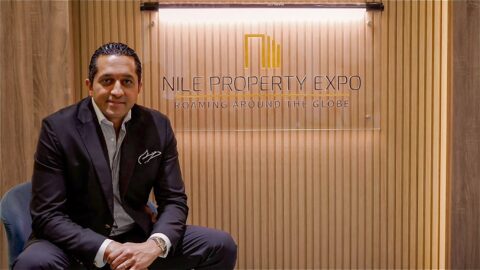
In this context, Invest-Gate met with Dr. Bassem Kalila, Chairman of Expo Republic and Founder of the “Nile Property Expo,” in a comprehensive strategic dialogue to review the outcomes of this international conference, analyze the shifts in British investor appetite, and anticipate the future of foreign direct investment (FDI) into Egypt’s urban development sector. Below is the full text of the interview:
1. How do you evaluate the outcomes of the “Future of Egypt” conference in London after its conclusion, in terms of its actual impact on the appetite of British and international investors toward the Egyptian market?
The conference witnessed outstanding success and achieved a widespread positive resonance. The high-level attendance of the Ministers of Housing, Investment, and Finance, alongside the Deputy Governor of the Central Bank, significantly enhanced confidence levels among a broad spectrum of British businessmen and investors.
The panel discussion—in which Her Excellency Minister Randa El Menshawy participated alongside a group of Egyptian investors—delivered a package of reassuring messages directed at the British side. These messages focused on showcasing the following:
The Volume of Available Investments: Highlighting the promising investment opportunities within the Egyptian market.
Economic Resilience: Reaffirming the strength and capability of the Egyptian economy to grow and recover.
Infrastructure Readiness: Showcasing the efficiency of Egypt’s advanced infrastructure and its capacity to absorb, manage, and operate the mega national projects implemented over the past years.
2. What were the most prominent strategic messages you were keen to convey during the conference, and how were they received within the British market?
Discussions in the second pillar focused on highlighting the unprecedented leap accomplished by the Arab Republic of Egypt in the field of infrastructure. The dialogue reviewed the scale and nature of the giant national projects that have been executed, most notably:
Vital and Tangible Sectors: Modern transportation projects, road and bridge networks, and the development of the electricity sector, as well as water treatment and desalination plants.
Fourth-Generation Cities: The transition toward sustainable smart cities, led by the New Administrative Capital and New Mansoura City.
The British side demonstrated profound interest in exploring the dimensions of these projects and their direct positive impact on the growth and evolution of the real estate sector. Furthermore, British investors expressed their deep admiration for the volume of achievements realized by the Egyptian state over the past ten years. The conference served as an ideal platform to introduce them to these realistic achievements and major projects that Egypt has successfully transformed into a tangible reality.
3. What is the fundamental advantage that makes Egypt a distinct investment market today, one that competing markets find difficult to replicate?
Egypt possesses numerous unique competitive advantages that render it an attractive destination for British investors and expatriates alike. These were the core pillars we were keen to highlight and review during our bilateral meetings. These advantages are manifest in the following points:
Affordable Cost of Living: Egypt stands as an ideal and preferred choice for the foreign retiree segment, offering them an exceptional quality of life with an upscale standard of living at a highly competitive cost, starting from £800 to £1,000 per month.
Flexible Real Estate Facilitations: The Egyptian real estate market is characterized by offering residential units at attractive prices, coupled with extended payment plans and payment facilities reaching up to 8 and 10 years.
Temperate Climate and a Safe Environment: The weather and safety factors constitute a primary pillar in attracting the British side. The sessions witnessed sustained interest and repeated inquiries regarding the remarkable security and stability prevailing in the country.
Luxury Lifestyle: Egypt is witnessing growing demand from residing foreign communities due to the exceptional quality of life and luxury lifestyle provided by the state, particularly in world-class coastal destinations such as the Red Sea cities and the North Coast.
4. Where do the greatest investment opportunities lie currently: the North Coast, the Red Sea, smart cities, or long-term residential projects within new cities?
The Egyptian real estate market today is brimming with countless investment opportunities, which is a natural byproduct of the comprehensive urban expansion movement the country has recently witnessed. Accordingly, one cannot favor one geographical region over another; the New Capital, the North Coast, and the Red Sea each possess unique and diverse competitive advantages:
The North Coast is considered one of Egypt’s leading tourism and real estate destinations, having successfully established its position over recent years as an attractive destination for investment, leisure, and seasonal residence.
The Red Sea region is also witnessing growing appeal, supported by its unique natural assets and the development of infrastructure and services, reinforcing its position as a key destination for tourism and investment. At the same time, integrated destinations there, such as El Gouna, Soma Bay, Hurghada, and Sharm El Sheikh, continue to strengthen their presence in the market, benefiting from their ability to offer integrated lifestyles and diverse tourism experiences that attract visitors and investors throughout the year.
In the same context, the new cities, such as the New Capital, New Cairo, and Sheikh Zayed, represent a different investment dimension, as they offer a modern, integrated lifestyle that fulfills the aspirations for permanent residency and long-term investment.
This exceptional diversity in the Egyptian real estate product is the secret behind the market’s strength and its capacity to attract various segments of investors.
5. What is the most influential factor in a British investor’s decision: investment yield, lifestyle, or long-term market stability?
Several pivotal factors intertwine to collectively form a major catalyst in directing the British investor’s decision toward the Egyptian real estate market. These factors stand as core pillars supporting investment attractiveness in Egypt, the most important of which are:
High Investment Yield: The return on investment (ROI) in Egypt remains one of the vital and powerful attractions for foreign investors seeking robust and sustainable returns.
Distinguished Lifestyle (Luxury Lifestyle): Egypt offers a luxurious and modern lifestyle that surpasses, in many of its aspects, the options available in Europe, making it a decisive element in attracting investors and expatriates.
Comprehensive Stability (Economically, Politically, and Security-wise): Stability represents the most critical baseline for any investment decision. The Egyptian state has successfully proven its high efficiency and capacity to entrench this stability economically, politically, and security-wise with absolute merit—particularly during the recent period and the regional challenges and variables the area has witnessed. This has reinforced Egypt’s position as a “safe haven” for foreign investments.
6. What were the most prominent concerns or inquiries raised by British and international investors during the meetings and gatherings?
The most prominent concerns raised recently revolve around the geopolitical tensions that the Arab region has witnessed over the past few months. In response to these apprehensions, reality confirms that the Arab Republic of Egypt has successfully presented an exceptional model of remarkable political and security stability, which has powerfully bolstered the competitive stance of the Egyptian market and forged an immense investment opportunity out of it.
This witnessed stability was not only attractive to the foreign investor but also encouraged many Arab counterparts and investors of various Arab nationalities to adopt Egypt as a strategic alternative choice or a “Plan B” for residency and investment. The Egyptian state has demonstrated a resilient and superior capacity to absorb and transcend all surrounding tensions and potential difficulties, thereby transforming these regional challenges into an added competitive advantage in favor of the Egyptian market rather than a burden upon it.
7. Do you believe that the British investor has become bolder in entering emerging markets, or have global economic conditions driven them toward more caution and selectivity?
Undoubtedly, the British investor today has become more willing and bolder in heading toward emerging markets. This is a shift dictated by several economic factors and pressures inside the United Kingdom, most notably the sharp rise in tax rates, the continuous increase in the cost of living, and their ongoing search for an environment that enjoys the advantages of stability, safety, and a favorable climate.
These variables represent an exceptional opportunity for the Egyptian real estate market, given the availability of all these components as core attraction elements within our market. Consequently, the British investment passion to expand into Egypt is already present. Our pivotal role now lies in how to design and develop the “targeted real estate product” that precisely meets their aspirations and matches the international specifications they seek, ensuring their desires are fulfilled, whether for investment purposes or for permanent housing and residency.
8. What is the real difference between a developer who succeeds within the local market and one who is capable of convincing a British or European investor to buy into their project?
The fundamental and practical difference between a successful real estate developer and one unable to establish a presence beyond the local market lies in two main pillars: seriousness and operational commitment.
A successful developer is that “serious” developer whose work anchors upon the following standards:
Commitment to Timelines: Achieving construction execution rates that align perfectly with the pre-determined delivery schedules.
Product Credibility: Delivering the real estate product with the exact specifications and conditions agreed upon without any breach.
Fulfilling International Client Aspirations: Offering an integrated, fully finished real estate product equipped with all the utilities and services (facilities) that the foreign investor seeks.
Professional Facility Management: Providing a robust and sustainable facility management and maintenance system for the project. Investors abroad seek an investment and ownership experience entirely free from any obstacles or issues related to finishing, furnishing, or the standard of operational services.
Accordingly, the developer who possesses the capability to present this integrated, turnkey real estate product is the one most worthy of gaining the trust of the international client and investor, and capturing the largest market share.
9. Do you see that some Egyptian developers are still addressing the market in a local language, whereas the global investor requires an entirely different discourse?
Regrettably, yes; a wide sector of real estate developers still focus their marketing and sales strategies exclusively on the “local market.” In my assessment, this approach represents a short-sighted strategy that requires immediate, systematic reconsideration and adjustment given the current variables in market dynamics.
Real estate sales to clients and investors abroad have come to represent a fundamental pillar and a substantial percentage of total sales in the Egyptian real estate market today, having crossed the 40% threshold for some major real estate companies. Based on these data points, it has become imperative for developers to redirect their investment vision and develop their products to align with the requirements of the international client.
Continuing to address the local market alone may expose companies to severe sales and operational challenges during the upcoming period, especially in light of the relative slowdown we are currently witnessing in local sales velocity. This makes expanding toward international markets the true safety valve for sustaining growth.
10. What tools or transformations are required to enhance Foreign Direct Investment (FDI) inflows into Egypt during the coming years?
Enhancing Foreign Direct Investment inflows into the Egyptian real estate sector requires close synergy and integration of roles between the State and real estate developers. This can be achieved by adopting a package of strategic tools, most prominent of which are:
Streamlining Property Registration Procedures: Working on alleviating the procedural challenges associated with the real estate property registration system to provide a more flexible and secure investment environment for the foreign investor.
Launching a “Unified Platform” for Real Estate Export: Formulating and launching a single regulatory and legislative umbrella to oversee the real estate export file, thereby ensuring the unification of marketing and promotional efforts for the Arab Republic of Egypt in international forums.
Professional Marketing of National Achievements: Adopting a world-class, systematic promotional model that showcases promising investment opportunities and highlights the structural leap and mega national projects executed by the state over the past ten years.
The synergy of the State’s efforts with the expertise of real estate developers under a unified vision is the ideal path to maximize the attractive power of the Egyptian market and translate these tools into tangible results that support the national economy.
11. If you were granted a direct, one-minute meeting with a European Investment Minister, what core message would you deliver regarding investment opportunities in Egypt?
My message would be clear, direct, and inspired by the reality of the structural leap our nation has witnessed: “The synergy of the State’s efforts with the expertise of real estate developers under a unified vision is the ultimate path to maximize the attractive power of the Egyptian market. Today, Egypt possesses an advanced, highly efficient infrastructure and smart fourth-generation cities executed over the past ten years to absorb and guarantee the success of large-scale investments within a stable and secure climate. Therefore, we invite you to utilize these national milestones in exceptional investment partnerships.”
12. If we were to return to London five years from now, what headline do you hope to read in the British press concerning the performance of Egyptian real estate?
When looking at the future of the Egyptian real estate market over the next five years, our aspirations center on seeing the echo of this success reflected periodically and systematically in major British and international newspapers and media outlets. These aspirations are summarized in the following pillars:
Data Availability and Transparency: For international newspapers to become a platform for displaying accurate, updated data and statistics regarding the Egyptian real estate market, making it easier for foreign investors to make their investment decisions based on reliable figures and indicators.
Highlighting Positive Market Performance: Tracking and monitoring the continuous growth of economic real estate indicators in Egypt, and shedding light on success stories that reflect the market’s resilience and high competitiveness.
We are fully confident that, under the steady steps and continuous development the sector is currently undergoing, this vision will transform into a tangible reality in the near future.
13. What is the volume and impact of Arab and Egyptian investments within Britain, and can they be transformed into a stronger investment bridge between the two countries?
The Arab Republic of Egypt and the United Kingdom share a close economic and historical partnership spanning many decades, as Britain represents the strategic partner and the largest investor in terms of European investments within the Egyptian market.
This logistical and investment interconnectedness reflects the existence of a “sustainable economic bridge” that ensures the continuity of investment inflows and mutual exchange across various vital sectors, most notably:
Developmental Sectors: Strengthening joint cooperation in commercial, industrial, and economic fields in general.
The Real Estate Sector: This axis represents one of the primary targets we seek to develop and expand in scope during the upcoming phase by creating new investment mechanisms that attract more British capital and afford mutual expansion opportunities for Egyptian and Arab investors.
We look forward to leveraging the strength of these historical relations to propel the real estate export sector and the growth of joint ventures toward more distinguished horizons.