Amid the rapid transformations witnessed in Egypt’s real estate sector, the handover of units no longer represents the end of the development cycle, but rather the true beginning of a more complex and impactful phase, which is the operation of projects and the management of urban communities efficiently and sustainably. The success of any project is no longer measured solely by the quality of execution or the speed of sales, but by its ability to transform into a vibrant community capable of attracting residents and providing a comprehensive living experience, supported by effective services and a sustainable operational infrastructure.
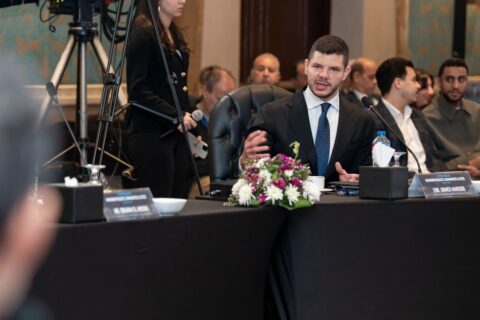
Ahmed Mansour: Actual Project Operations Are the Benchmark of Real Estate Development Success
In this context, Eng. Ahmed Mansour, CEO of Cred Developments, highlighted during the roundtable organized by Invest-Gate on Monday, February 16, 2026, titled “The Post-Sales Era: Managing Projects, Communities & Cities,” that the Unified Building Law No. 119 of 2008 obliges developers to ensure the operational readiness of their projects. He emphasized the need for clearer guidance on this legislation, including specifying a time frame for completion to guarantee that projects are ready for occupancy and to encourage smooth operational launch, while establishing mechanisms to determine the order of occupancy in new cities, whether for service providers or residents.
He noted that stimulating the operational phase depends on the project’s full readiness, which can be achieved by facilitating completion procedures and setting a clear timeline to ensure a smooth transition and occupancy process. Mansour added that one of the main challenges is that residents are often not ready to move to the new capital. To address this, the company has intensified events over the past eight months to familiarize consumers with the project and assure them of its readiness for habitation, with all operational measures outlined in the company’s plan to ensure post-delivery continuity.
He concluded by pointing out that the real estate market includes approximately 6,700 developers, yet fewer than 2,000 of them comply with paying real estate taxes.
In this context, the importance of revisiting the regulatory and legislative frameworks governing the post-sales phase becomes evident. This ensures clarity of roles between developers and operators, enhances project readiness for actual occupancy, and supports residents’ smooth and organized transition to new cities. Moreover, this phase imposes operational and marketing challenges that require innovative solutions and close coordination among various stakeholders, including government entities, developers, and service providers, to maximize the economic and urban benefits of real estate projects.